



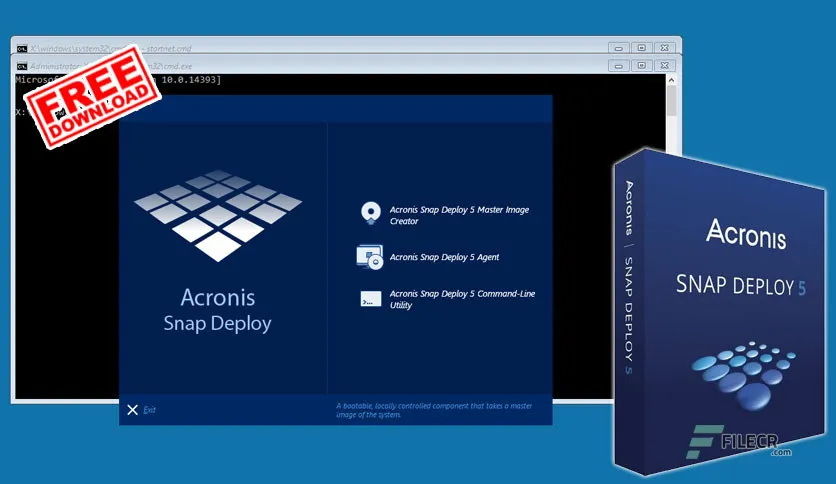
Free Download Acronis Snap Deploy 5.0.2028 Full Version offline installer. This program helps you deploy disk images to multiple machines simultaneously over a network.
Acronis Snap Deploy 5.0.2028 Full Version Overview
Acronis Snap Deploy 5.0.2028 is an enterprise-grade provisioning software designed to image workstations and servers rapidly. IT administrators use this tool to clone a master operating system image to dozens or hundreds of computers at once. Disk-imaging technology captures exact sector-by-sector copies or intelligent file-level backups.
Target environments include corporate offices, educational labs, and training centers needing uniform system configurations. Multicast and unicast network data transfers minimize bandwidth saturation during massive rollout operations. Standalone deployment modes allow provisioning machines without pre-existing network infrastructure via bootable media.
Acronis AnyData Engine powers the underlying architecture for reliable cross-platform hardware restoration. Deployment templates save configuration profiles for automated, unattended workstation setups. Centralized management consoles monitor active deployment sessions, connection statuses, and machine identifiers in real time.
Key Features
- Universal Restore technology handles dissimilar hardware deployment by injecting required storage controller and chipset drivers automatically during setup.
- Multicast data transmission sends a single image stream to multiple target machines simultaneously, preserving network bandwidth.
- Acronis PXE Server integration boots target computers across the local network without requiring USB flash drives or optical discs.
- Customizable deployment tasks assign unique computer names, domain memberships, IP configurations, and security identifiers to each target.
- Independent offline media builder generates bootable Linux or Windows PE environments on USB drives and ISO images.
- Post-installation scripts execute custom batch files or PowerShell commands automatically after the operating system setup finishes.
- Wake-on-LAN functionality powers on target workstations remotely across the network before starting deployment tasks.
- Centralized monitoring dashboard tracks progress percentages, transfer speeds, and error logs for every active machine.
System Requirements and Technical Details
- Supported Operating Systems: Windows 10, Windows 8.1, Windows 7, Windows Server 2019, Windows Server 2016, Windows Server 2012 R2, Windows Server 2008 R2.
- Processor: 1 GHz x86 or x64 processor.
- RAM: 1 GB minimum operational memory.
- Disk Space: 500 MB free hard disk space for installation components.
- Display: 1024x768 screen resolution or higher.
- Network: Ethernet adapter supporting TCP/IP network communication.
Installation and Deployment Guide
Download the installation package using the provided download link on this page and extract the archive. Run the setup executable with administrator privileges and accept the default configuration settings. Complete the wizard prompts to install the management console, OS deployment server, and PXE server components.
Launch the Acronis Snap Deploy Management Console and create a master master target image using the bootable media creator or live imaging tool. Configure a new deployment task by selecting the master image, defining target machine filters, and setting up automated post-installation configuration parameters. Power on the target computers via Wake-on-LAN or network boot, verify that all systems connect successfully to the deployment session, and execute the transfer.
Monitor the progress dashboard until the imaging process finishes across all connected endpoints. Verify that target machines reboot correctly into the newly deployed operating system and join the specified domain. Close the management console and clean up temporary deployment logs or unused master images from the local storage repository.
Mencari link download asli… menunggu 0 detik. Mohon tunggu, biasanya beberapa puluh detik.