



Mcafee Change Control 8.3.5.126 Overview
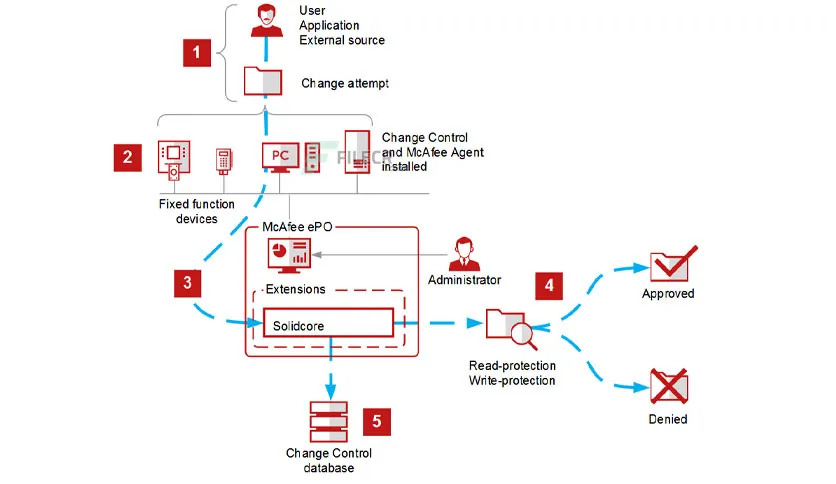
Free Download Mcafee Change Control 8.3.5.126 full version offline installer. Software locks down endpoints by preventing unauthorized changes to system files, registry, and applications.Mcafee Change Control delivers enterprise-grade whitelisting and change prevention for organizations that need strict control over endpoint configurations. Product blocks all file executions, installations, and modifications unless explicitly approved by administrators. Healthcare providers, financial institutions, and government agencies use this tool to meet compliance requirements like HIPAA, PCI-DSS, and NIST 800-53.Software operates through default-deny enforcement model. Every executable, script, and system modification gets blocked unless it matches approved rules or digital signatures. Centralized management console lets IT teams create policies, review change requests, and audit all blocked attempts across thousands of endpoints. Built-in reporting engine generates compliance documentation automatically.Core Features of Mcafee Change Control
- Application whitelisting with signature-based and hash-based rule sets that identify trusted executables
- Registry protection preventing unauthorized modifications to critical Windows registry keys
- File integrity monitoring tracking changes to system directories, configuration files, and program folders
- Temporary elevation allowing approved users to perform specific administrative tasks without full admin rights
- Centralized policy management deploying consistent security rules across distributed endpoints
- Real-time change blocking stopping malware execution before first instruction runs
- Compliance reporting generating audit trails for PCI-DSS, HIPAA, SOX, and GDPR requirements
- Network updater distributing policy changes and product updates without requiring endpoint restart
System Requirements and Technical Details
- Operating System: Windows 7, Windows 8, Windows 8.1, Windows 10, Windows 11, Windows Server 2008 R2, Windows Server 2012, Windows Server 2016, Windows Server 2019, Windows Server 2022
- Processor: Intel Core 2 Duo 2.0 GHz or AMD equivalent
- Memory: 2 GB RAM minimum, 4 GB RAM recommended
- Hard Disk: 500 MB available space for agent installation
- Display: 1024 x 768 resolution
- Network: TCP/IP connectivity to management server required for policy updates
- Additional Software: .NET Framework 4.5.2 or higher
Installation and Configuration Guide
Download setup file using button on this page. Installer package includes agent software and management console components. Run executable with administrator privileges. Setup wizard detects existing security software and checks for conflicts with other endpoint protection tools.Accept default installation path during setup process. Installer places agent service in Program Files directory and creates Windows service set to automatic startup. Setup wizard prompts for management server address if deploying agents in enterprise environment. Standalone installations skip this step and operate in local mode.Launch management console after installation completes. First-time startup triggers policy creation wizard. Configure baseline protection mode selecting between default-deny or audit-only enforcement. Default-deny blocks all unauthorized changes immediately. Audit mode logs violations without blocking, useful for testing policies before full enforcement. Most organizations start with audit mode for two weeks to identify legitimate applications needing whitelist entries.Create first whitelist rule by navigating to Application Control section. Add trusted publishers using digital signature verification. Microsoft-signed Windows components get approved automatically. Third-party business applications require manual rule creation. Specify executable path, file hash, or publisher certificate. Test rule by attempting to launch whitelisted application on protected endpoint.Configure change request workflow in User Rights section. Temporary elevation feature lets standard users request permission for specific administrative tasks. IT administrators receive notification and can approve or deny requests remotely. Set automatic approval for low-risk changes like printer driver installations. Route high-risk requests like registry modifications through manual approval queue. Adjust notification thresholds in Alert Settings to reduce false positives while maintaining security visibility.Mencari link download asli… menunggu 0 detik. Mohon tunggu, biasanya beberapa puluh detik.